
How Do I Match Solar-Panel Wattage to a Portable Power Station?
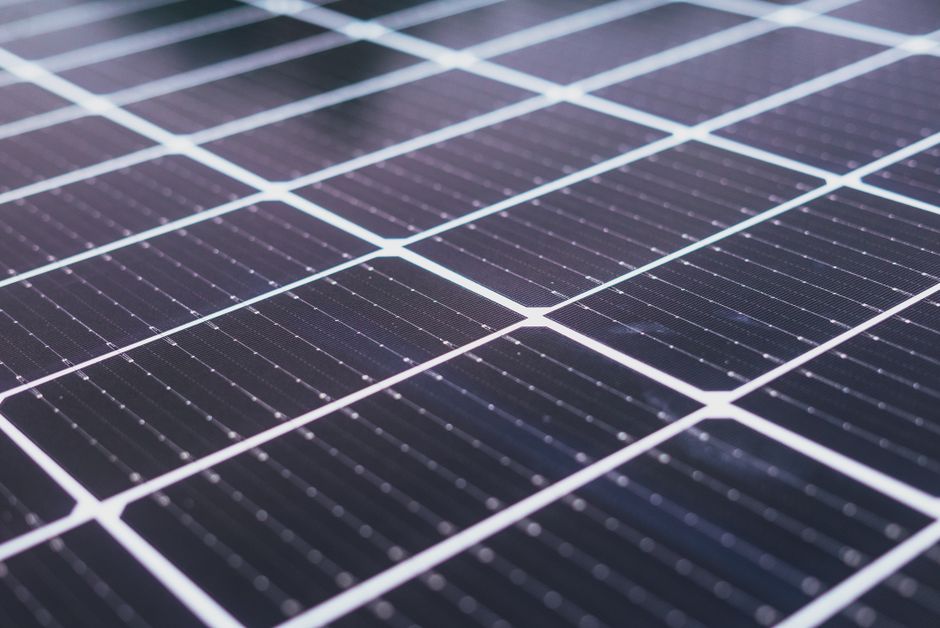
Match panel wattage to the power station's maximum solar input, then keep the panels' open-circuit voltage, current, and connector within the station's limits. For a roughly 1,000Wh unit, 400W of accepted solar input has a theoretical 2.5-hour recharge time, but real charging takes longer because panel ratings assume laboratory conditions, not ordinary weather.
How many watts of solar panels do I need to recharge a 1,000Wh power station?
For a 1,000Wh-class power station, choose enough panel nameplate wattage to reach, but not disregard, the station's stated solar-input ceiling. The simple planning calculation is battery capacity divided by accepted solar watts: 1,008Wh divided by 400W equals 2.52 hours in an idealized calculation. The EcoFlow DELTA 1000 is a useful reference point because its manual lists 1,008Wh of capacity and 400W maximum solar charging input.
That number is a planning floor, not an outage promise. The U.S. Department of Energy explains that PV ratings are measured at standard test conditions: 1,000 W/m2 sunlight and 25 degrees C cell temperature. Actual sunlight is usually lower and operating cells are typically hotter, so a panel commonly produces less than its nameplate rating.
| Planning example | Battery capacity | Station solar-input ceiling | Theoretical time at that accepted input |
|---|---|---|---|
| EcoFlow DELTA 1000 | 1,008Wh | 400W | About 2.52 hours |
| BLUETTI AC70 | 768Wh | 500W | About 1.54 hours |
The table is arithmetic, not a field prediction. BLUETTI says the AC70 can finish charging within two hours at a continuous 500W solar input, while also warning that weather, sunlight intensity, and panel orientation affect charging time. That is the practical rule: calculate from the station's accepted watts, then leave schedule margin for conditions.
The sizing drill: read the battery capacity, read the solar-input ceiling, divide capacity by ceiling, then treat the result as the best-case checkpoint. If your outage plan depends on a specific location and season, use NREL's PVWatts V8 rather than assuming a fixed daily amount of sun. Its location-based model uses weather data and accounts for array capacity, tilt, azimuth, losses, and climate inputs.
Can I connect a larger solar panel than my power station's input rating?
You can only consider a larger panel array after its voltage, current, and connector specifications pass the power station manual's limits; a higher panel wattage label does not override those limits. The station's maximum input is the hard gate. Its voltage range and current cap decide whether the electrical match is safe and usable.
Use this order. First, confirm the panel array's open-circuit voltage is inside the station's allowed range. Second, confirm current is at or below the limit. Third, confirm the connector path. Finally, compare wattage with the maximum accepted solar power.
The BLUETTI AC70 manual states: 12-58V open-circuit voltage, 10A maximum current, and 500W maximum solar input; it explicitly prohibits panels above 58V open-circuit voltage. It uses an XT60PM-M input, and BLUETTI identifies MC4-equipped third-party panels within that voltage range as compatible through the appropriate connection path. The AC70 manual is the deciding document, not a retailer title.
Series and parallel wiring change different limits. According to the EcoFlow DELTA manual, series wiring adds voltage while current stays the same; parallel wiring adds current while voltage stays the same. That gives you a clean diagnostic: if voltage is the constraint, do not casually add panels in series. If current is the constraint, do not casually add them in parallel.
Weak buying question: “Is this a 400W panel?” Strong buying question: “What are this array's open-circuit voltage, current, connector, and wiring arrangement against my station manual?” That swap prevents the expensive mismatch.
Why is my solar generator charging much slower than the panel's advertised wattage?
Your solar generator is charging slower because advertised panel wattage is a standardized test rating, while the station only receives what the panels produce under current conditions and what the station can accept. The Department of Energy lists time of day, season, clouds, dust, haze, shadows, rain, snow, and dirt among the factors that affect solar production.
Run the four-check reset. Check sun angle and shade first. Check the panel surface for dirt, snow, or obstruction second. Check weather and season third. Check the station display or manual against its input ceiling fourth. A 500W-rated panel cannot make a 400W-limited station accept more than 400W, even in unusually favorable sunlight.
Temperature matters too. DOE states that practical module conditions are usually less sunny and hotter than the standard test condition, which works against nameplate output. Long-term performance also changes: DOE says PV module efficiency degrades by about 0.5% per year. Do not blame the cable before checking the variables the system cannot hide.
For outage planning, separate energy from power. DOE defines energy capacity as the total energy a battery can store, usually in kWh, and power capacity as the rate it can release, usually in kW. A phone charger, a CPAP, and a refrigerator do not make the same demand. Refrigerator compressor startup is especially important: BLUETTI says motor or compressor startup can be two to four times a device's rated power, while EcoFlow lists a separate surge rating for its DELTA.
Budget configuration rule: buy the station for the loads you must keep running, then buy panels that fit its electrical limits and give it a realistic chance to reach its input ceiling in favorable conditions. Public source material here does not establish current panel or station prices, so it cannot identify the cheapest package. It does establish the better filter: compatible specifications beat an impressive wattage label.
One safety boundary is non-negotiable. The National Weather Service says the only completely safe action during a thunderstorm is to get inside a safe building or vehicle, and it advises waiting 30 minutes after the last rumble of thunder before returning outdoors. Do not create an outdoor panel task during lightning.
Close the loop this week: write down your station's Wh capacity, solar watts, voltage range, current limit, connector, and the one load that matters most. Then compare every panel listing against those five lines. Use the same evidence-first habit applied in this site's guide to what at-home teeth whitening works for sensitive teeth: the specification that governs use matters more than the largest claim on the box.
Frequently Asked Questions
Can portable solar panels recharge a power station during a storm outage?
They can recharge a station when solar generation is available, but a thunderstorm is not the time to place, move, or adjust panels outdoors. The National Weather Service says the only completely safe action during a thunderstorm is to get inside a safe building or vehicle, and it advises waiting 30 minutes after the last thunder before returning outside. Charge from panels already safely deployed only if you do not need to go outdoors to handle them.
What connectors and voltage limits do I need to check before buying panels?
Check the station manual for its solar-input connector, allowable open-circuit voltage range, maximum current, and maximum input power. For example, the BLUETTI AC70 specifies an XT60PM-M station input and permits 12-58V open-circuit voltage, 10A maximum current, and 500W maximum solar input. The EcoFlow DELTA manual specifies a solar-to-XT60 cable and a 10-65V, 10A, 400W solar-input limit.
Should I use solar power directly for a CPAP, fridge, or phone charger?
Use the power station as the load's power source and size both the battery capacity and AC output for the equipment you plan to run. A phone charger is a smaller load than a CPAP or refrigerator, while refrigerators can have compressor startup demand that exceeds their running rating. The EcoFlow DELTA manual distinguishes its 1,600W total AC rating from its 3,100W surge rating, and BLUETTI notes that motor or compressor startup demand can be two to four times a device's rated power.